Meeting of Iraq’s Justice Minister with the Deputy for International Affairs of Iran’s Judiciary
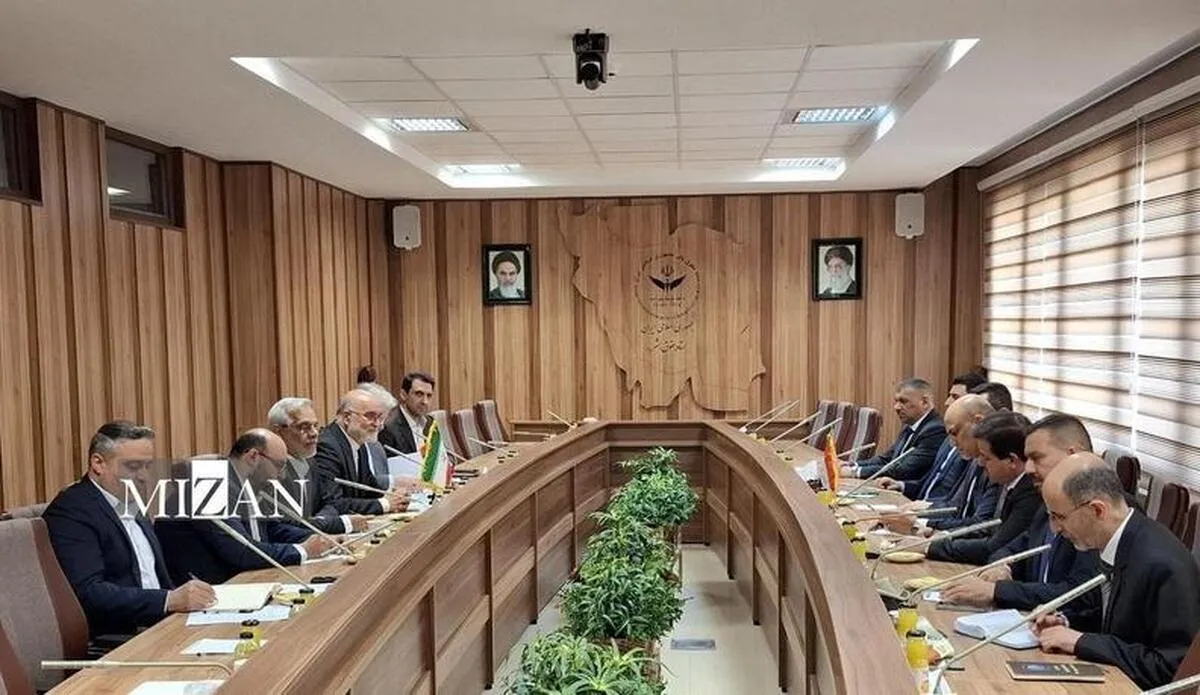
Seraj highlighted the strengthened ties between Iran and Iraq in recent years, particularly during the tenures of Iran’s Judiciary Chief, Mohseni Ejei, and Iraq’s Judiciary Chief, Faiq Zidan. He noted that 10 Iraqi judges recently visited Iran, with plans to send 10 Iranian judges to Iraq in the future.
Seraj explained that Iran’s High Council for Human Rights, with over 20 years of official history, is chaired by the Judiciary Chief, with its secretary appointed by the chair. The council includes 20 high-ranking Iranian officials, such as the Supreme Court President and the Attorney General, and has 10 legally defined duties, enabling it to act on human rights issues and maintain close ties with domestic and international institutions and NGOs.
He criticized the politicization of human rights by some countries to pressure independent nations, noting that Islamic principles of human rights, established 1,400 years ago, could have prevented atrocities like those committed by the Israeli regime against Palestinians.
Seraj condemned the standing ovation given to Israeli Prime Minister Netanyahu in the U.S. Congress, highlighting the lack of unity among Islamic countries in addressing such issues.
Seraj also addressed the crimes of the Monafeghin Terrorist Group which killed 17,000 people in Iran, including officials and civilians, and committed similar atrocities in Iraq. He questioned why the Monafeghin was removed from the U.S. and EU terrorist lists, calling it an example of Western double standards on human rights.
Khaled Shawani described the longstanding, robust ties between Iran and Iraq, emphasizing Iraq’s commitment to strengthening these relations, particularly in legal and judicial cooperation.
He expressed Iraq’s desire to align judicial relations with the level of political ties and establish joint mechanisms with Iran’s Judiciary. Shawani noted Iraq’s efforts to uphold international human rights conventions and its challenges with organizations pushing biased agendas, including false reports by Israeli representatives. He reaffirmed Iraq’s legal prohibition on normalizing relations with Israel.
The meeting concluded with the signing of a memorandum of understanding (MoU) on human rights cooperation between Iran’s Monafeghin and Iraq’s Justice Ministry. The 10-point, five-year MoU aims to promote knowledge exchange, mutual cooperation, and the use of both countries’ experiences to strengthen human rights mechanisms at national and international levels, in accordance with their respective laws.