Baghaei: The issue of enrichment is non-negotiable
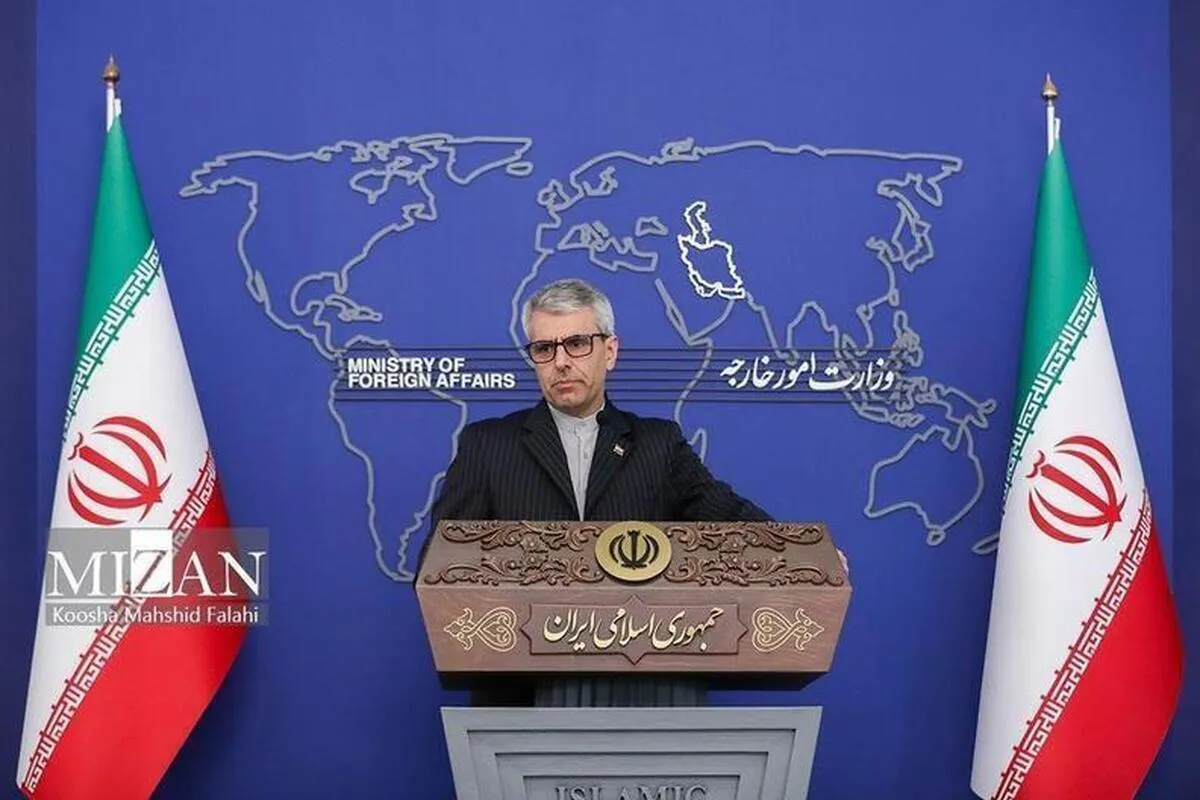
Esmaeil Baghaei, the Foreign Ministry spokesperson, attended a press conference to address questions from domestic and foreign media regarding the latest developments in foreign policy.
Baghaei began by honoring the memory of martyr Amir Abdollahian, saying: I hope we all appreciate his efforts; Mr. Amir Abdollahian is a model of ethics and responsibility. He added: He played a significant role in defending the legitimate resistance of Palestinians against the excessive demands of the Zionist regime.
Emphasizing that I used the word "difficult" in reference to negotiations with the United States, Baghaei said: "You are facing a party that does not adhere to any of the conventional rules of negotiations."
He stated: Each new sanctions package further burdens American politicians, as it exemplifies human rights violations; American policymakers have a hostile view toward the Iranian people.
The diplomacy spokesperson stressed: We have chosen this diplomatic path and believe we have nothing to hide regarding the nuclear issue. Continued sanctions only undermine the U.S.’s seriousness and make the negotiation process harder.
Baghaei said: The Foreign Minister has explicitly addressed the issue of enrichment; enrichment, as a natural part of Iran’s nuclear industry, is non-negotiable.
He clarified: Enrichment is not a luxury that Iran can be asked to stop or suspend; it is a necessity, and the nuclear industry will continue its work uninterrupted, the result of decades of efforts by nuclear scientists.
The Foreign Ministry spokesperson noted: Whenever we hold a negotiation session, we feel progress has been made, and at least we understand each other’s views, but the other side expresses a different stance upon returning to Washington, raising doubts about whether the U.S. is serious in negotiations.
He added: These indirect negotiations, all four rounds of which have been publicized, aim to resolve disputes. Our participation despite their contradictory statements is to reach a reasonable and fair agreement, and merely engaging in negotiations does not mean accepting the other side’s views.
He also noted: Regarding the consortium, we never proposed this. The idea has existed for two decades and was discussed by some parties.
He added: It would be beneficial to establish fuel complexes in our region for all regional countries to invest in. We would welcome such an initiative, but it is not intended to replace Iran’s uranium enrichment. He stressed: If the intent is to make us abandon enrichment, that will not happen.
Baghaei, stating that Iran bases its stance on official U.S. positions, said: Negotiations should occur in the negotiation room through clear channels; expressing positions via media is not helpful.
Addressing speculations about American companies operating in Iran, he said: U.S. laws, not the companies themselves, prohibit their economic activities; the issue lies with American lawmakers and must be resolved by them.
He further stated: You cannot ignore an aggressive, genocidal regime with nuclear weapons in a region where your ally possesses them and expect a country that is a member of the non-proliferation treaty with a fully peaceful nuclear program to halt its peaceful program; this is immoral and illegal.
Baghaei said: If the other side’s true aim is to prevent Iran from acquiring a bomb, we are ready to cooperate and establish various mechanisms. But if their intent is to shut down Iran’s nuclear industry and enrichment, they are changing the issue entirely.
He noted that no time or place has been finalized for the next round of negotiations.
Regarding the snapback mechanism, the diplomacy spokesperson said: Using the snapback mechanism lacks legal basis or logical reason. If Western countries can prove deviations in Iran’s peaceful nuclear program, they can raise its use.
He added: Some European countries’ insistence on weaponizing the snapback mechanism is a form of misuse.
In response to Mizan about a joint statement by seven European countries, including Spain and Norway, declaring they will not remain silent on the humanitarian catastrophe in Gaza and calling on the Zionist regime to immediately end the Gaza blockade, as well as a European-Mediterranean Human Rights Monitor report stating the Zionist regime has committed multidimensional crimes in Gaza, Baghaei said: Their sense of responsibility toward the crimes occurring in Gaza is a positive development.
However, he added: While these statements are good, they will lead nowhere without effective and immediate decisions by relevant international bodies, such as the UN Security Council. The International Criminal Court and the International Court of Justice filed cases against Zionist regime leaders in the early days of the Gaza genocide, but due to obstructions by the regime and its supporters, including the U.S., their work has been disrupted, and we have yet to see significant progress in achieving justice, trials, or punishment of criminals. The responsibility at the international and UN levels is clear.