Sky News uncovers: Rape and Silence in Britain’s Military Institution
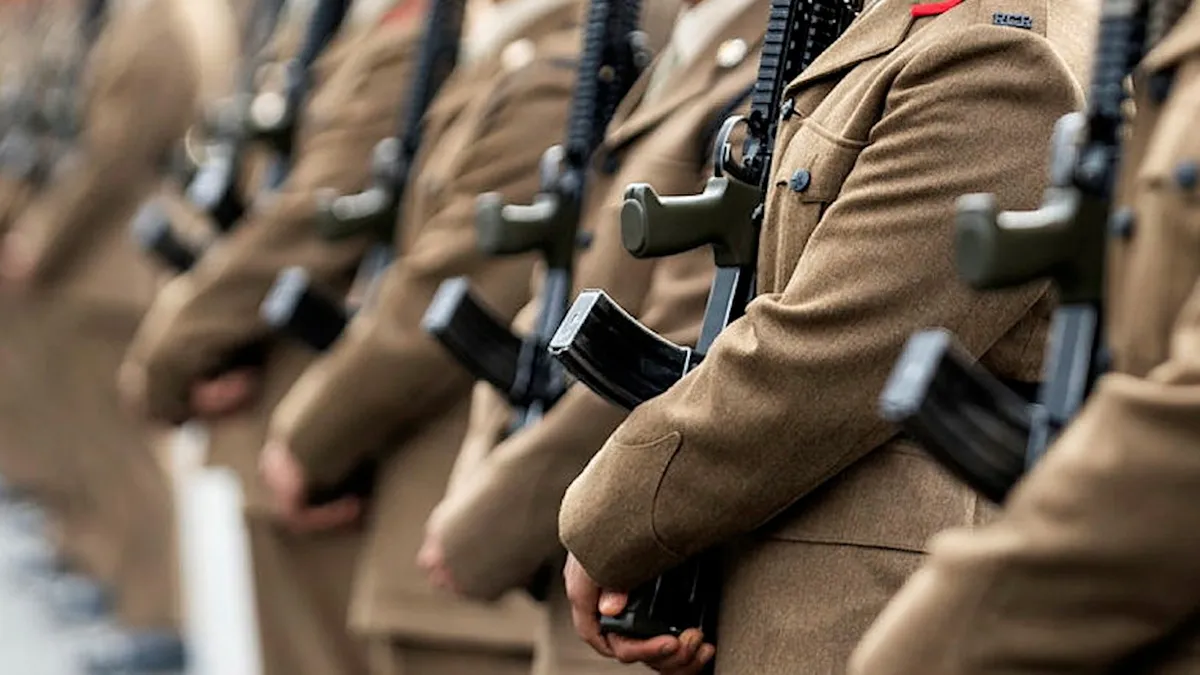
Sky News, in a documented report citing a former female officer under the pseudonym “Amy,” disclosed that a toxic and patriarchal culture prevails in the Royal Military Police (RMP), where sexual harassment, assault, and rape of female soldiers are not only ignored but perpetrators are granted complete impunity, allowed to leave the army, and continue their lives as civilians.
Amy, who served in the military police for over a decade, was a victim of rape by a senior sergeant in her unit, who, she says, “instead of being arrested and tried, was allowed to resign and leave the army without a criminal record.” Amy stated that “over 12 women” filed complaints against this individual, none of which led to any outcome.
The former officer explained that the perpetrator would enter the women’s quarters, sit on their beds, force her to drive at night, and talk about sexual matters. In one instance, during a public mission, he violently pulled aside part of her clothing and physically assaulted her.
Another woman, who previously served as a captain in the British Army and later resigned, shared a similar account. Under the pseudonym “Katie,” a veteran of Afghanistan, she said she was repeatedly harassed and, when she sought help from civilian police, faced disciplinary threats.
In part of her interview with Sky News, Katie said: “They put me in front of the sergeant and reprimanded me. They told me I had no right to contact civilian police. They said if I did, I would be punished.” She added: “In the army, I just wanted to escape. I hid behind tanks, among weapons, to stay safe from them. I no longer felt human; I felt like an object.”
These accounts emerge while the UK government consistently portrays itself as a champion of women’s freedom and human rights values. However, the realities within the army’s structure paint a starkly different picture from official claims.
More concerning is that, despite the widespread increase in cases of sexual harassment and assault in the British Army, these cases are still handled internally within the military institution—a practice that human rights activists and even some UK parliamentarians consider the primary reason for covering up structural corruption.
Tanmanjeet Singh Dhesi, chair of the Commons Defense Committee, told Sky News: “The handling of these crimes must be removed from the military institution and entrusted to civilian police. As long as the army investigates itself, justice will not be served.”
Meanwhile, the UK Ministry of Defence has promised to establish a Tri-Service Complaints team to remove harassment and discrimination cases from the army’s chain of command. However, victims view this structure as ineffective and superficial.
Amy, reacting to these promises, said: “As long as friends interrogate their friends, nothing will change. We live in a patriarchal environment where women have no chance… They’ve only changed the name of the structure, but the same people will conduct the investigations.”
Previously, numerous cases of rape and abuse in the British Army have been publicized. The suicide of 19-year-old soldier Jaysley Beck, whose complaint of sexual harassment was ignored, has become a symbol of the army’s failure to address the rights of female soldiers. Experts believe such incidents are merely the tip of the iceberg of corruption hidden within the UK’s military structure.