New clash between Budapest and Kyiv
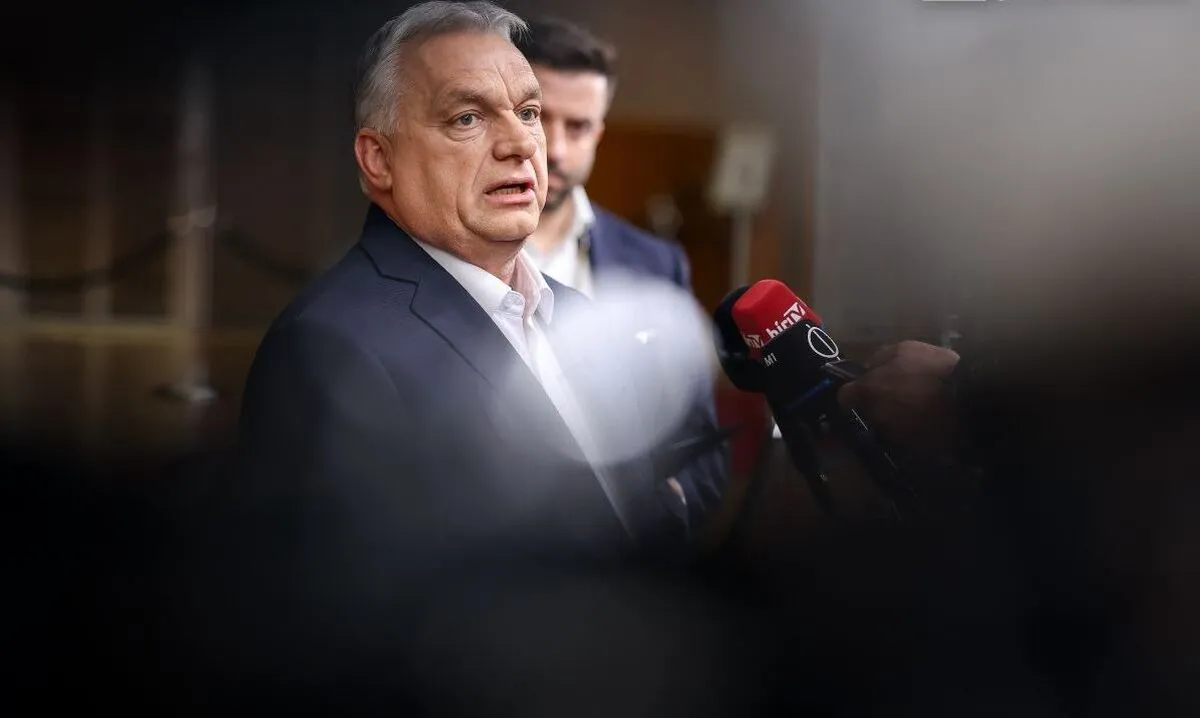
Viktor Orbán, Hungary’s Prime Minister, has become a persistent irritant for Kyiv. Since the onset of the Ukraine war, Budapest, as a member of the EU and NATO, has consistently diverged from the rhythm set by NATO leaders in confronting Moscow.
Orbán makes no secret of his affinity for Russian President Vladimir Putin. During Joe Biden’s presidency, European NATO members repeatedly tried to isolate Hungary within the alliance. Just as this strategy seemed poised to succeed, Donald Trump’s victory in the November 2024 election upended all calculations.
Today, Orbán is recognized globally as a key ally of the Trump administration in Europe, openly endorsing the White House’s approach to a ceasefire in the Ukraine war. But the story doesn’t end there.
Recently, Ukraine’s security service announced that, for the first time, it had uncovered and neutralized a suspected espionage network linked to Hungary’s military intelligence. According to Kyiv, the network aimed to obtain classified information about Ukraine’s defense and military capabilities. Two individuals, allegedly tied to Hungarian intelligence, have been detained, with the possibility of more suspects emerging after further interrogations.
The detained individuals were reportedly collecting data on Ukrainian forces in certain regions, mapping coordinates of air defense systems, and seeking details about defensive infrastructure.
Moscow’s silence, Budapest’s denial
Russian intelligence officials have remained silent on the matter. However, Ukraine’s security service is convinced that Budapest orchestrated the espionage operation. Notably, one of the detained individuals is a former member of Ukraine’s defense forces with access to information about their former unit’s air fleet and defense systems. Under Ukrainian law, both detainees face life imprisonment and asset confiscation.
The issue is clear: Orbán stands accused of undermining NATO’s collective security framework. If proven, this could have serious consequences for Hungary’s prime minister. However, the U.S., under Trump’s leadership, is unlikely to support harsh measures against Orbán.
Budapest has repeatedly acted as a catalyst for Trump’s security policies in Europe during both his first and second terms. The U.S. currently needs allies within NATO, and Budapest plays a pivotal role in shaping and maintaining this balance. Consequently, the U.S. is likely to neutralize or diminish efforts by NATO’s major European members—Germany, France, and the UK—to confront Orbán’s government.
Orbán’s tit-for-tat strategy
Hungary has not limited its response to denying Kyiv’s allegations. In reaction to Ukraine’s public disclosure of the espionage case, Budapest expelled two Ukrainian diplomats. Hungarian Foreign Minister Péter Szijjártó claimed that anti-Hungarian propaganda is rampant in Ukraine and often baseless.
The expulsion of the diplomats underscores the depth of the rift between Budapest and Kyiv, a divide likely to persist. Some analysts suggest that only a permanent ceasefire in the war could ease tensions between Hungary and Ukraine. Others argue that as long as Volodymyr Zelenskyy remains in power in Kyiv, restoring bilateral relations is virtually impossible.
Orbán believes that European support for NATO’s eastward expansion, which he sees as the root cause of the Ukraine war, was a mistake from the outset. He views Zelenskyy as a symbol of security, political, and geopolitical costs for Europe.
The mutual animosity between Orbán and Zelenskyy, fueled by both overt and covert aspects of the ongoing war, is deeply entrenched and unlikely to be resolved soon. The guarded stances of both leaders toward each other show no signs of softening in the near future.