The multi-layered dimensions of Trump’s regional trip; Washington faces a complex regional order
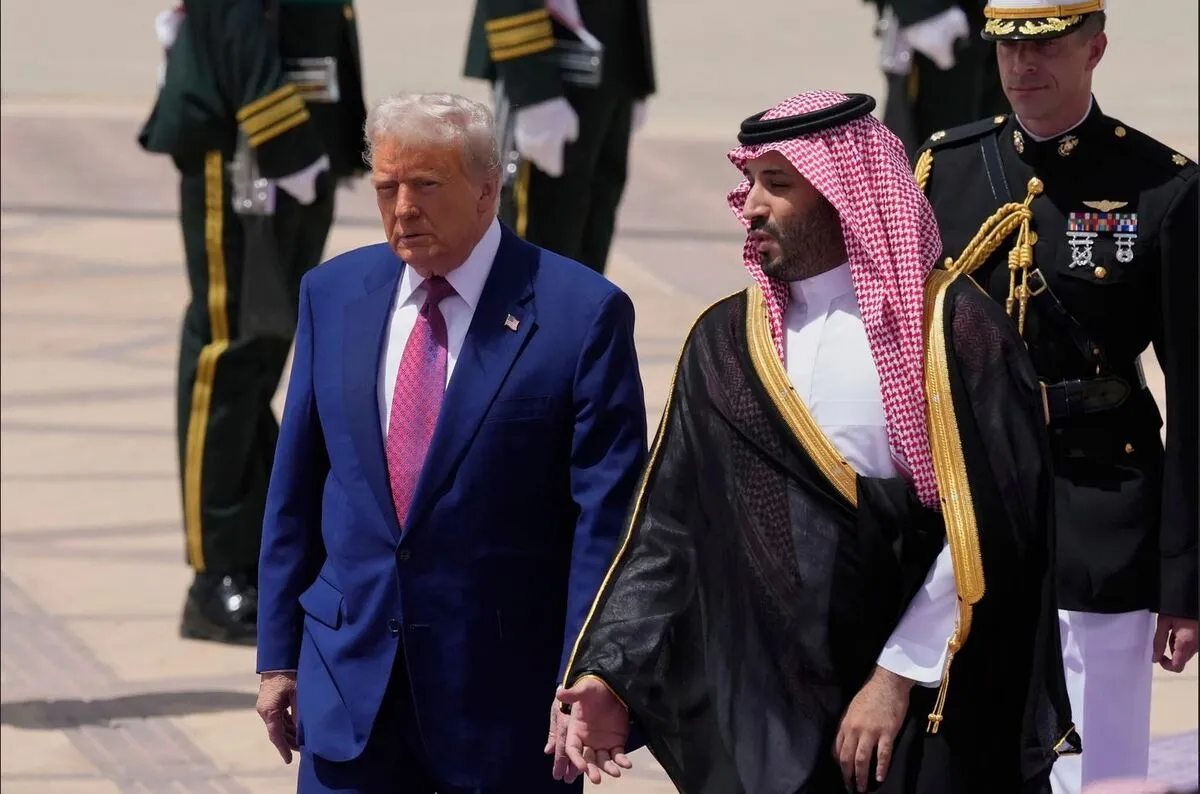
US President Donald Trump begins his regional trip to the three Arab Gulf states on May 13 and will continue until May 16. The US President will visit Saudi Arabia, the UAE, and Qatar during this trip.
Trump arrives in Saudi Arabia on May 13 and holds bilateral meetings; the meeting is scheduled for the morning of May 14.
After the summit, Trump will travel to Doha to meet with Qatari Emir Sheikh Tamim bin Hamad Al Thani; on May 15, he will travel to Abu Dhabi and meet with UAE President Mohammed bin Zayed.
There have been many reports and speculations about the agenda of this trip, and some media outlets described the basis of this trip as large trade agreements, especially with Saudi Arabia, which have been announced to be worth one trillion dollars.
This trip is taking place while the American media outlet Associated Press previously claimed that Trump would use a fake name for the Persian Gulf during this trip.
In this regard, Abed Akbari, an expert on international affairs, explained some of the aspects of Trump’s trip to the region in an interview with Mizan.
An attempt to reinterpret America’s position in the regional security order
Akbari said: Trump’s trip is more than just a continuation of Washington’s traditional approaches in the Persian Gulf; it is an attempt to reinterpret America’s position in the regional security order.
He continued by stating that the agenda of this trip mainly includes 3 axes: discussion about new security arrangements with the GCC countries, assessment of energy capacities within the framework of the policies of containment of Russia and China, as well as consultation on developments related to the Iranian nuclear issue and future strategies in this area.
Multi-layered goals of Trump's trip to the region
The international affairs expert pointed out that the goals of Trump's trip are multi-layered and stated: On the one hand, Trump is seeking to rebuild political-security relations with key Persian Gulf countries, especially in light of new developments such as the rapprochement between Tehran and Riyadh.
Pointing out that on the other hand, the economic axis is also prominent, he stated: Issues such as the energy market, infrastructure investments, and new military and cyber technologies are on the agenda.
Akbari said: Washington is trying to redefine new relations in the region as an "active regulator", in a way that its management is in line with America's long-term interests in the region.
Claims about the Persian Gulf: A scenario for Iran's reaction
The international affairs expert, referring to the claims made about the Persian Gulf on the eve of Trump's visit to the region, stated: "The making of these claims, rather than being the official position of the governments, is a sign of a "symbolic battle" and a war of perception that some media trends and lobbies are pursuing."
He stated: "Usually, on the eve of tense or sensitive trips, these linguistic scenarios are activated to test Iran's reaction and gauge the coherence of public opinion in the Arab countries of the Persian Gulf."
Akbari emphasized: "These actions are a preemptive tactic to distort diplomatic priorities that can divert focus from the main issues, such as the regional security order."
America's confrontation with a more complex regional order
The international affairs expert, referring to various speculations raised on the eve of Trump's visit to the region, stated: "The so-called 'multi-faceted containment' plans have always had a place in the literature of American think tanks, but today's conditions in the region have changed compared to the past.
He continued: "America is facing a more complex regional order that China, as an effective mediator and economic actor, is shaping. Meanwhile, the rapprochement between Iran and Saudi Arabia, which re-emerged in Foreign Minister Araghchi's recent visit to Riyadh, could create a more stable regional balance platform to reduce tensions and maintain energy flows."
Akbari said: "For this reason, although lobbies such as the Zionist regime or the Foundation for Defense of Democracies support a return to maximum pressure, the dominant approach in Washington is examining hybrid-participatory options."