Will the White House really halt the tariff war against Germany?!
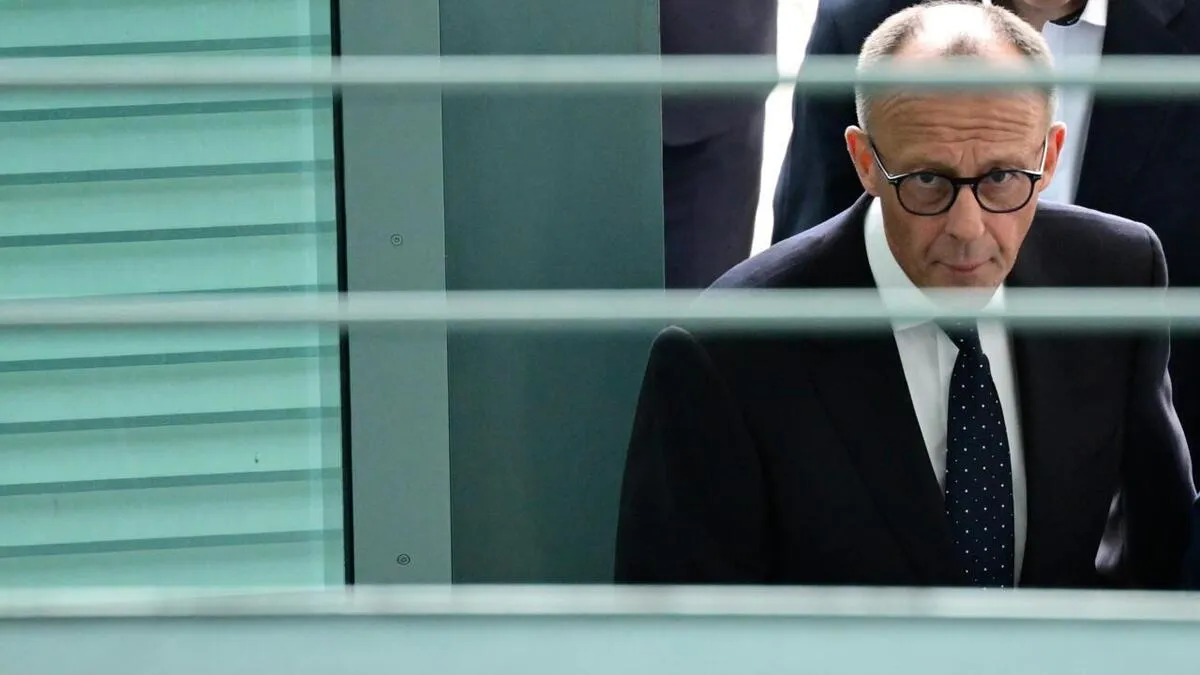
The recent phone call between the U.S. President and German Chancellor Friedrich Merz has sparked speculation and analysis about Berlin-Washington relations. Some security and economic analysts believe that, despite both countries’ NATO membership, there is a serious conflict between Trump’s proposed Ukraine ceasefire plan and Germany’s approach to the war.
Beyond that, Trump has no intention of backing down in the trade war against Berlin and continues to view Germany as a “commercial rival” in his broader strategy. In other words, Trump and Elon Musk see curbing Germany’s economic power as the primary means to limit the economic maneuverability of the Eurozone and the EU.
The destruction of Europe’s economic system and the collapse of the Eurozone are overarching goals embedded in Trump’s manifesto and that of his allies, making European leaders skeptical of any genuine flexibility from the new U.S. President in this major economic and tariff battle.
The phone call story
Friedrich Merz, Germany’s new Chancellor, spoke with U.S. President Donald Trump for the first time two days after taking office. According to Germany’s Deutsche Welle, citing the Chancellor’s office, both sides emphasized resolving trade disputes quickly. However, such claims seem overly optimistic given Trump’s broader confrontational economic stance toward the EU!
The reality is that the White House’s tariff war, impacting the top 100 countries with the most trade with the U.S., has not spared Germany. The temporary reduction of tariffs to 10% does not signal the end of this trade battle but rather a prelude to further steps in this process.
Elon Musk and the idea of containing Berlin
In this equation, Elon Musk’s role cannot be overlooked. Germany’s current government comprises two traditional parties (Social Democrats and Christian Democrats). Meanwhile, both Musk and Trump support the rise of the Alternative for Germany (AfD) party and its dominance in Berlin’s power structure. In such circumstances, the U.S. is unlikely to take steps to reduce economic tensions with Berlin.
Musk and Trump believe that Germany, as the economic heart of the Eurozone, must continuously grapple with tariff tensions created by the White House. Returning to a pre-tariff-war status quo would mean dismantling the White House’s grand strategy against Europe’s economic entity, something it will not abandon under any circumstances. Germans hope that aligning with Washington on issues like ending the Ukraine war could yield exceptions or concessions to curb Washington’s economic war, but such a view holds no weight in the minds of Musk and Trump!
Diplomatic platitudes vs. harsh realities
Friedrich Merz assured Trump that, 80 years after World War II, the U.S. remains an “irreplaceable friend and partner” for Germany. This mirrors the approach of former Christian Democrat Chancellor Angela Merkel during Trump’s first term, which ultimately proved largely unsuccessful!
Berlin now faces two real challenges: First, the current coalition government in Berlin is significantly weaker and more minimal than Merkel’s government during Trump’s first term. As noted, Elon Musk openly supports replacing this coalition with the AfD, a far-right nationalist party aligned with Trump. In such a context, Trump has no incentive to grant concessions to a weak government he does not view favorably.
Merz isn’t truly hopeful!
On the other hand, the intensity and scope of the U.S. tariff war against Germany and other European countries are far greater than during Trump’s first term. The scale of these tariffs, targets many of Europe’s major commercial and industrial relations. In this context, the most realistic approach to describing the new German government’s relations with the White House is “managing economic tensions,” not eliminating them!
The new German Chancellor, in this call, called for the EU and the U.S. to agree on completely eliminating tariffs, but Trump is unlikely to comply. Germans have asked the Trump administration for both countries to mutually recognize technological standards to facilitate technical and regulatory trade. However, the U.S. President has shown little regard for alternatives to the tariff war at this level.
It is clear that Merz aims to strengthen transatlantic (U.S.-Europe) interdependence to create economic breathing room for Berlin amid Washington’s new trade war. However, the White House’s stance in this battle is far more rigid than the German government imagines. Crucially, even in Ukraine ceasefire talks, Washington has sidelined the three main NATO members—Germany, France, and the UK—effectively excluding them from the negotiating table. Trump and Musk’s strategy of rattling the Germans shows no signs of abating in the near term.