Head of Judiciary: Teachers can assist the Judiciary in crime prevention and reintegrating offenders
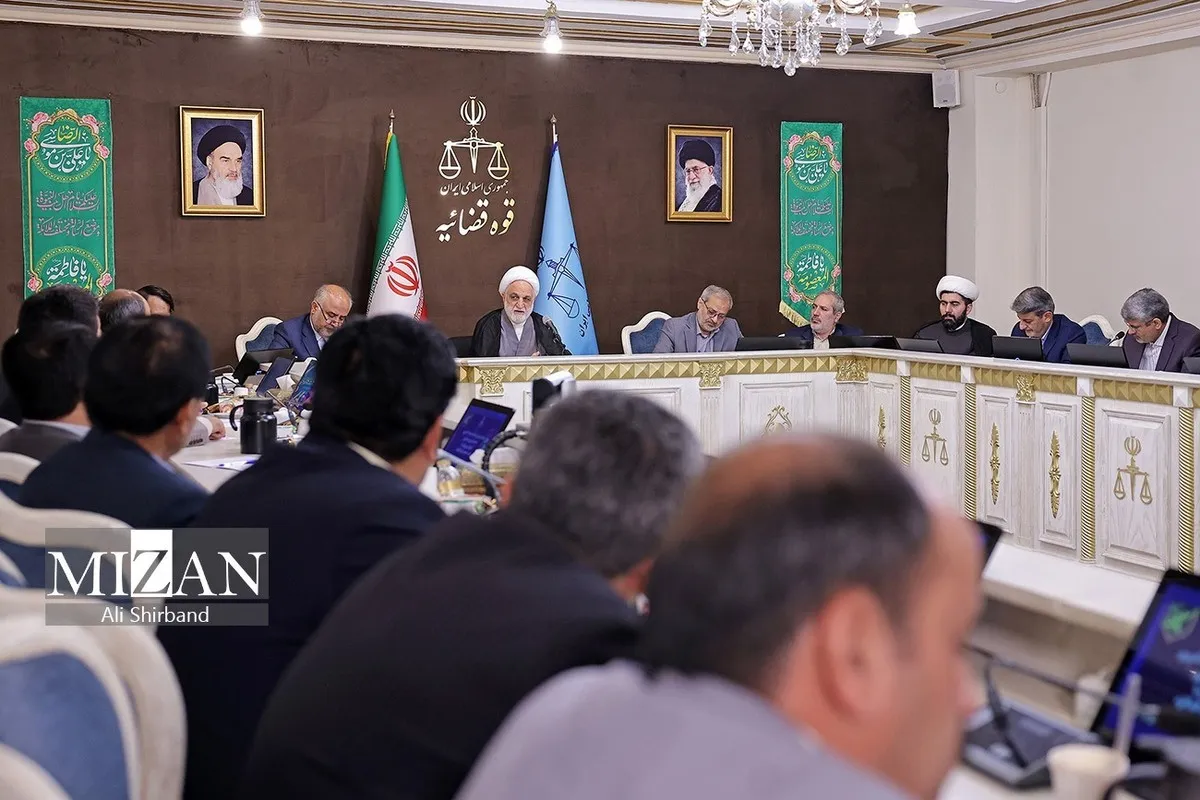
According to the Judiciary’s Media Center, Mohseni Ejei, during his remarks in the meeting with exemplary teachers and education officials, paid tribute to all martyrs, particularly martyred teachers such as Motahhari and Rajai. He elaborated on the significance and role of the education and training system, as well as the invaluable contribution of teachers within it, stating: “Teachers hold a prestigious position and bear significant responsibilities. The role of a teacher is so esteemed that Imam Ali (AS) said, ‘Whoever teaches me a single letter makes me his servant.’ I believe a good teacher is one who blends knowledge with art. A good teacher is an artist who knows how to quench students’ thirst for knowledge and virtues from the ocean of wisdom.”
The Head of the Judiciary added: “I constantly emphasize to my colleagues in the judiciary and all judges across the country that sometimes your conduct with the parties involved in a case has a greater impact than the verdict itself. I believe this principle also applies to our esteemed teachers, as their behavior and demeanor, both inside and outside the school, significantly influence the educational process of students.”
Referring to the issues raised by the exemplary teachers and education officials, the Head of the Judiciary said: “We in the Judiciary are fully prepared to hold specialized meetings with education officials to design a model and method to strengthen cooperation and data exchange between the Ministry of Education and the Judiciary.”
Elaborating on the Judiciary’s responsibilities where teachers can play an effective role, he stated: “We in the Judiciary place special emphasis on crime prevention and have diligently pursued preventive strategies to curb crime and victimization. In this critical and important arena, teachers and education officials can assist us, and we extend our hand for their support.”
The Chief Justice noted: “The country’s education system, with approximately 16 million students, over one million school staff, and around 30 million families, is a diverse and expansive system. Legal and judicial issues inevitably arise for members of such a vast system. Therefore, we in the Judiciary are ready to establish specialized and dedicated ‘dispute resolution’ mechanisms for the education community to prevent, as much as possible, the formation of judicial cases for its members and resolve their legal and judicial issues primarily through peace, reconciliation, and mediation.”
Mohseni Ejei added: “If a teacher or a student’s guardian faces a criminal issue and is subject to legal punishment, members of the education system can facilitate the application of legal leniency for that individual. By visiting correctional facilities and engaging in guiding conversations with the offender, they can create conditions for their remorse and rehabilitation, enabling them to benefit from legal leniency if eligible.”
The Head of the Judiciary further stated: “In 2022, circumstances led to the formation of approximately 90,000 cases involving defendants and convicts from various groups, including some teachers, students, and university students. If convictions had been issued for all of them or judicial cases formed, it would have provided a pretext for adversaries to exploit. Here, we sought assistance from seminaries, the Basij, academics, and teachers. Their presence in correctional facilities helped guide and reform the majority of those convicted in 2022, paving the way for their pardon. Many cases that had not yet reached the sentencing stage were also closed. Of course, we did not deny the possibility that some who expressed remorse might reoffend, but we could not ignore the opportunity to reintegrate many individuals just because of a possibility. Notably, criminals who committed heinous acts or organized activities were dealt with separately, faced legal consequences, and were not eligible for pardons or leniency.”
The Head of the Judiciary emphasized: “Teachers and members of the country’s education system can assist the Judiciary in reintegrating and reforming offenders and prisoners.”
He noted: “Last year, over 777 individuals were spared from retribution (qisas) through the forgiveness of the victims’ families. Certainly, as stated explicitly in the Quran, retribution ensures life, and it is not personal vengeance but a means to secure societal safety. However, in some cases, executing retribution has consequences for the family of the convicted and even the victim’s family. Thus, helping to secure release from retribution is considered a virtuous act. With the active participation of philanthropists and influential figures, including teachers, 777 individuals—a significant number—were given a new chance at life. In this regard, we in the Judiciary need the broader and more extensive assistance of you, our enlightened and transformative teachers.”