Details of the IAEA Inspection Process at Iran’s Nuclear Facilities
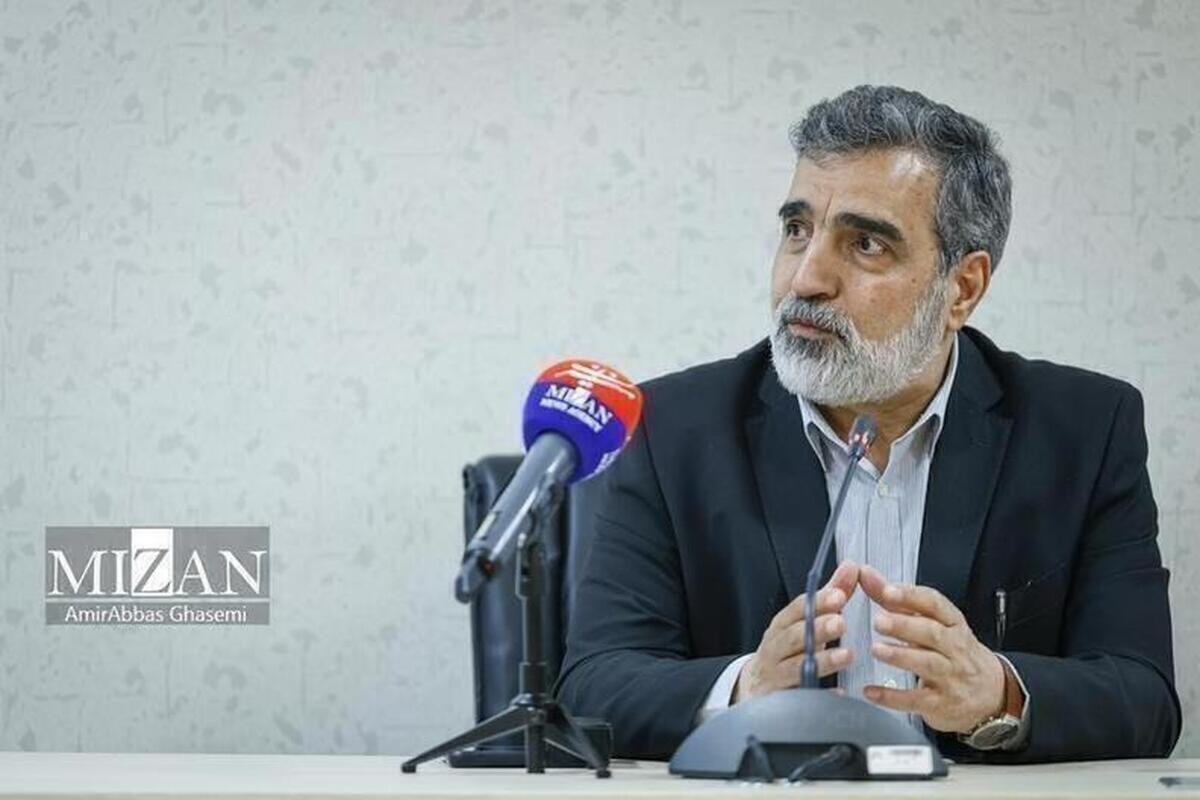
In an interview with Mizan News Agency, Behrouz Kamalvandi, spokesman and deputy head for international, legal, and parliamentary affairs at the AEOI, provided explanations about the process of inspections by the International Atomic Energy Agency (IAEA) at Iran’s nuclear facilities.
Stating that IAEA inspectors are currently not present in Iran, Kamalvandi said that inspections are conducted based on a framework determined by the Supreme National Security Council and the parliamentary law suspending cooperation. According to that law, inspection requests must pass through the Supreme National Security Council before permission is granted.
He said that inspection permission has so far been given to facilities that were not targeted or damaged; even then, not all such facilities were inspected, but only a number of them.
Regarding inspections of facilities that were targeted by U.S. and Israeli aggression, Kamalvandi stressed that security considerations are the most important issue. He added that the safeguards agreement is insufficient in this regard, as it is designed only for normal conditions.
The AEOI deputy head continued: therefore, in order to make any decision in this area, three conditions must be met—first, the legal framework must be taken into account; second, approval by the Supreme National Security Council must be obtained; and third, security must be guaranteed.
Emphasizing that Western pressure is counterproductive, Kamalvandi said that no country, after its nuclear facilities have been targeted, would easily open its doors to inspections that could once again endanger national security.
Commenting on recent remarks by IAEA Director General Rafael Grossi, Kamalvandi said that the agency’s chief sometimes speaks on political issues, and that Grossi’s comments on negotiations at times reflect political considerations.
Stating that the position regarding safeguards issues is clear, he said: “We have repeatedly said that safeguards in their current form cannot respond to wartime conditions. Therefore, measures must be devised, and discussions with the Agency on this matter must be conducted patiently and free from pressure. We will not allow pressure to place us in a situation where decisions are made that jeopardize the security of nuclear facilities; for this reason, the process may be a slow one.”
Regarding Iran’s steps to redefine cooperation with the IAEA following U.S. and Israeli attacks on nuclear facilities, Kamalvandi said that the foreign minister had previously initiated a path that resulted in the Cairo understanding. At the time, the foreign minister stated that the understanding was based on goodwill; however, Western parties failed to respect it and resorted to the snapback mechanism.
He said that Iran considers the snapback to be illegal, adding that the foreign minister had also stated that when the other side shows no goodwill, Iran can no longer implement the Cairo understanding. As a result, it was announced that the Cairo understanding is considered null and void by Iran.
Kamalvandi stressed that decisions must be made anew on how information about nuclear facilities is provided and how access to them is granted. He said these are extremely important issues that must be decided with caution, patience, and calm, and that Iran will not allow pressure to endanger national security or the safety of its nuclear facilities.