Head of the Judiciary issues an important order to the inspection organization for an extraordinary probe into the currency issue
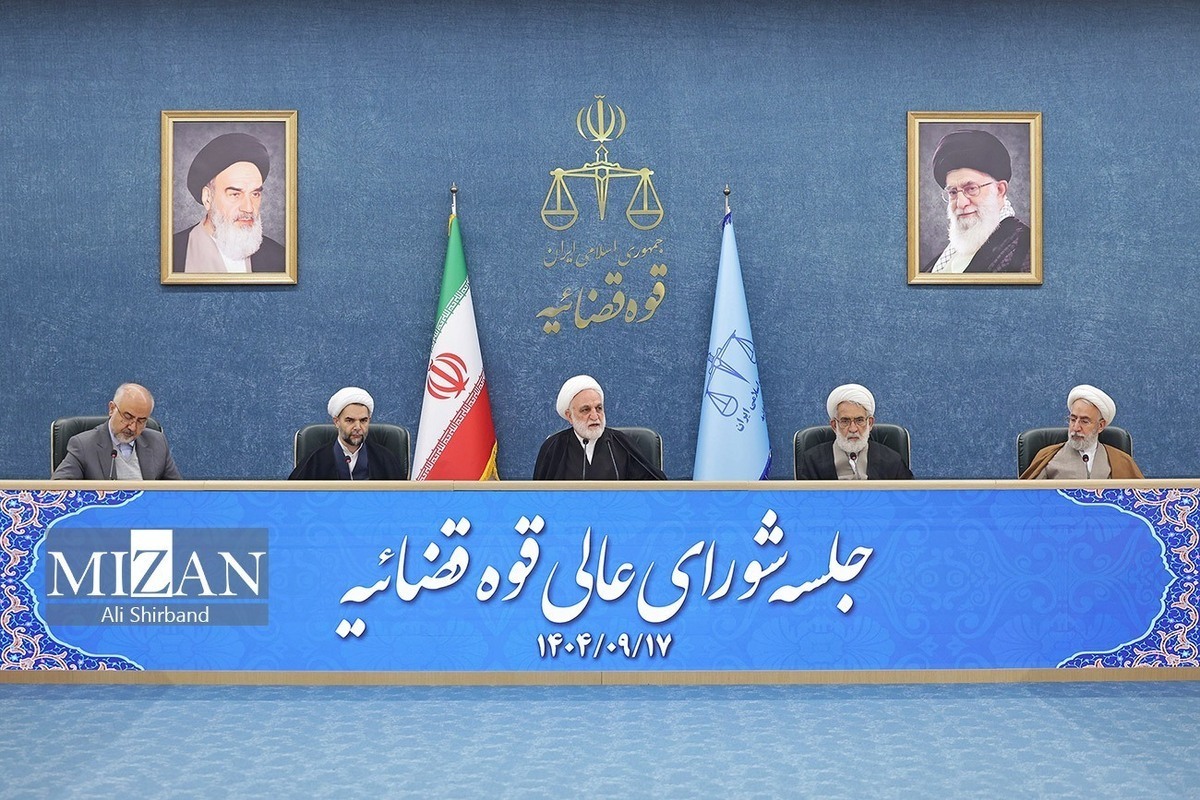
According to the Media Center of the Judiciary, Mohseni Eje’i, speaking today Monday, December 8 at a session of the Supreme Council of the Judiciary, referred to the issue of currency prices and said: In recent days, some economic activists have raised points regarding the currency issue in various meetings. At our recent meeting in Zanjan, one person claimed that today’s currency situation is not natural, but something that has been engineered. Accordingly, I instruct the Head of the Inspection Organization to raise this matter at an extraordinary session of the Coordination Council of Supervisory Bodies and to convene such a special session. At that meeting, efforts should also be made to draw on the views of economists and Central Bank officials. In any case, the Central Bank bears responsibility in this matter. Certainly, if negligence or misconduct has occurred and individuals have committed violations, they must be identified. It must be noted that the foreign exchange rate is linked to the value of the national currency, and even services and goods that are not directly related to the exchange rate may experience price changes due to fluctuations in currency prices.
The Head of the Judiciary went on to refer to the upcoming auspicious birth anniversary of Lady Fatimah al-Zahra (peace be upon her) and Women’s Day, congratulating and honoring the occasion.
Addressing the Judiciary’s Research Center and his Advisor for Women’s Affairs, he instructed them to undertake a comprehensive, multidimensional study of the lofty status of women and mothers in society and the family—based on the recent valuable and insightful remarks of the Supreme Leader regarding the status, dignity, and rights of women and the injustices committed against women in the Western world. They are also to work in coordination with the Legislative Branch and the Women’s Fraction of Parliament to take appropriate steps, if necessary, toward amending or enacting laws in this area.
The Head of the Judiciary again instructed the Research Center and the Advisor for Women’s Affairs to coordinate with the Legislative Branch and the Women’s Fraction of Parliament regarding the status, dignity, and rights of women, as well as injustices against women in the West, and to take necessary action for legal reform or legislation if required.
Marking Student Day once again, the Chief Justice said: Yesterday, I had the opportunity to once again be among students. Truly, when one observes the students’ sense of responsibility and their critical demands, it is heartening. The critiques raised by students are mostly rightful and accurate. When one hears these critiques, it becomes clear that contrary to the wishes of ill-wishers and enemies, our youth and students are perceptive and aware, attentive to the country’s issues, concerned, and far from passive.
Referring to Student Day as having an anti-imperialist and anti-foreign domination dimension, the Chief Justice noted: Student Day commemorates the events that took place on 16 Azar 1332 (December 7, 1953) and represents an anti-arrogance uprising. On that day, our students, as the awakened conscience of society, could not tolerate the welcome extended by the tyrannical monarchy and traitors to the nation to the U.S. Vice President—who had played a key role in the disgraceful coup of August 19, 1953—and they protested. On that day, several students were wounded, and three of them—Qandchi, Bozorgnia, and Shariat-Razavi—were martyred.
In closing, referring to the recent provincial visits of the High Judicial Council to the provinces of Yazd and Zanjan, Mohseni Eje’i instructed the relevant judicial authorities to fulfill every promise made to the people during these trips and to focus their efforts on implementing all resolutions from these visits. In this regard, the Head of the Judiciary stressed: It must never be the case that people say they came, merely made promises, and left.