Head of the Judiciary: The Judiciary must be a refuge, sanctuary, and trusted institution for all people
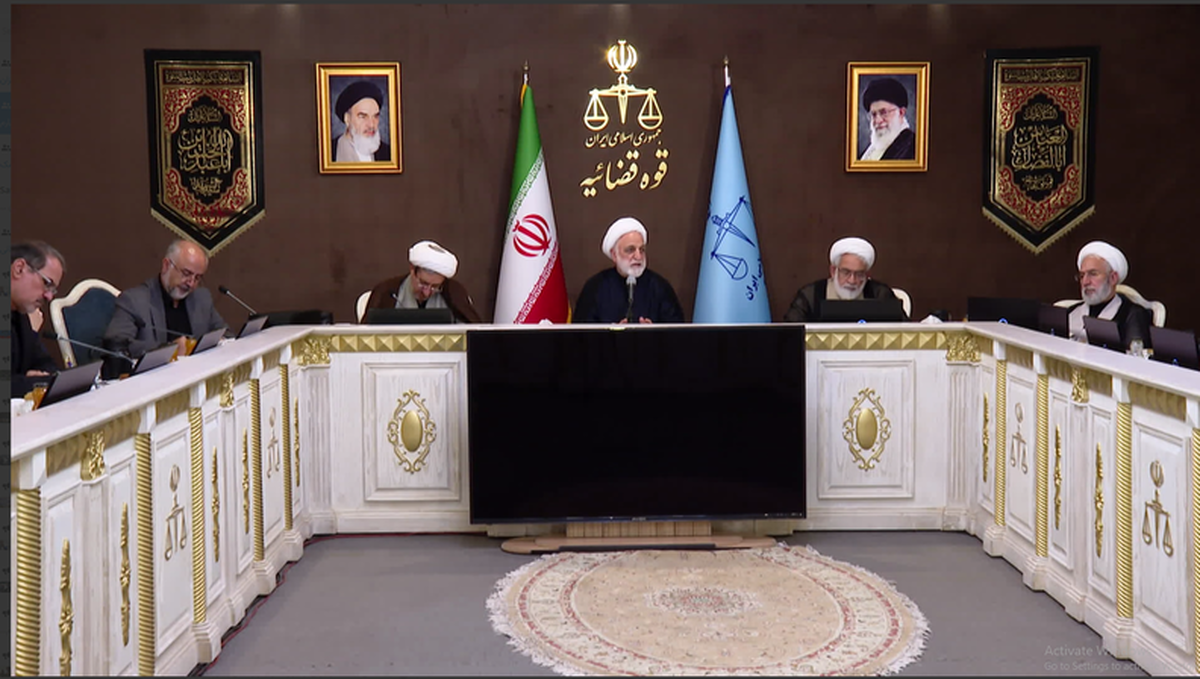
According to the Judiciary’s Media Center, Mohseni Ejei, in a video conference with officials and staff of the Judiciary’s Protection and Intelligence Center nationwide — held on the anniversary of the center’s establishment — expressed condolences on the occasion of Arbaeen and stated:
“I sincerely appreciate the tireless efforts and all-encompassing dedication of all officials and personnel of the Judiciary’s Protection and Intelligence Center in safeguarding the judicial system and implementing preventive measures to keep staff from going astray. I also stress the necessity of continuing this path with even greater strength and determination.”
The head of the judiciary emphasized: “As the Supreme Leader has repeatedly stated, the Judiciary must be a refuge, sanctuary, and trusted institution for all people. Anyone who feels their rights have been violated should be able to turn to the Judiciary and seek redress.”
Highlighting the high value of the judicial institution in the public’s mind, he said: “The Judiciary is an institution where even the smallest blemish becomes highly visible; the people expect more transparency and integrity from it than from other branches of government — because it is the Judiciary that corrects distortions and irregularities; it is the Judiciary that confronts corruption and the corrupt; it is the Judiciary that secures people’s rights. Therefore, if the judiciary is harmed or tainted, other social domains will also suffer loss and damage.”
Mohseni Ejei stressed that every effort must be made to strengthen public trust: “We must adopt measures and strategies that further increase public confidence in the Judiciary. Over the past four decades, significant efforts have been made to make the judiciary a genuine refuge and trusted body for the people — but this mission must be completed through greater perseverance and hard work.”
Calling public trust and satisfaction with the Judiciary “absolutely vital,” he posed a series of questions for reflection: “Have we done everything necessary to win the public’s trust? Are there paths we have not taken, or measures we have failed to adopt? If obstacles have stood in our way, have we explained them to the people so that they know we have not been negligent?”
He added that all citizens, regardless of background or viewpoint, must truly believe the Judiciary is their refuge: “To fully realize this, innovative approaches may be needed. For example, imagine a person who is truly entitled to a right but has no evidence to prove it, and the judge has no documents to establish the claim. In such cases, the ruling may not satisfy the claimant, and they may leave court with distrust. We must find solutions so that even such individuals leave court with a sense of satisfaction and trust — confident enough to return to the judiciary in the future.”
On combating corruption, Mohseni Ejei said: “Corruption is a contagious disease. We must fight it — and its roots — more forcefully than ever, using innovative and more scientific methods. If it is not possible to address all forms of corruption at once, we should start with those cases whose elimination has the greatest deterrent effect, so that others understand that corruption will be met with severe, uncompromising action.”
He noted there are differing views on publicizing corruption cases: “Some believe public and open confrontation with corruption deters it; others believe such publicity actually increases corruption and erodes trust. We must find a way to fight corruption decisively and lawfully, but without causing collateral damage.”
The Judiciary’s protection and intelligence units, he said, must adopt a preventive, “physician-like” approach: “If someone makes a misstep, we should help them at the first stage, not wait until they commit further violations and then catch them. We must give them the opportunity to repent and reform.”
He also warned about individuals prone to intellectual or moral deviation, stressing the need for close monitoring, particularly for those in high positions: “When an individual in a senior post errs, the harm is greater. Therefore, greater vigilance is needed for officials and protective staff, to ensure no blemish mars their record.”